
Exit velocity, from your phone.
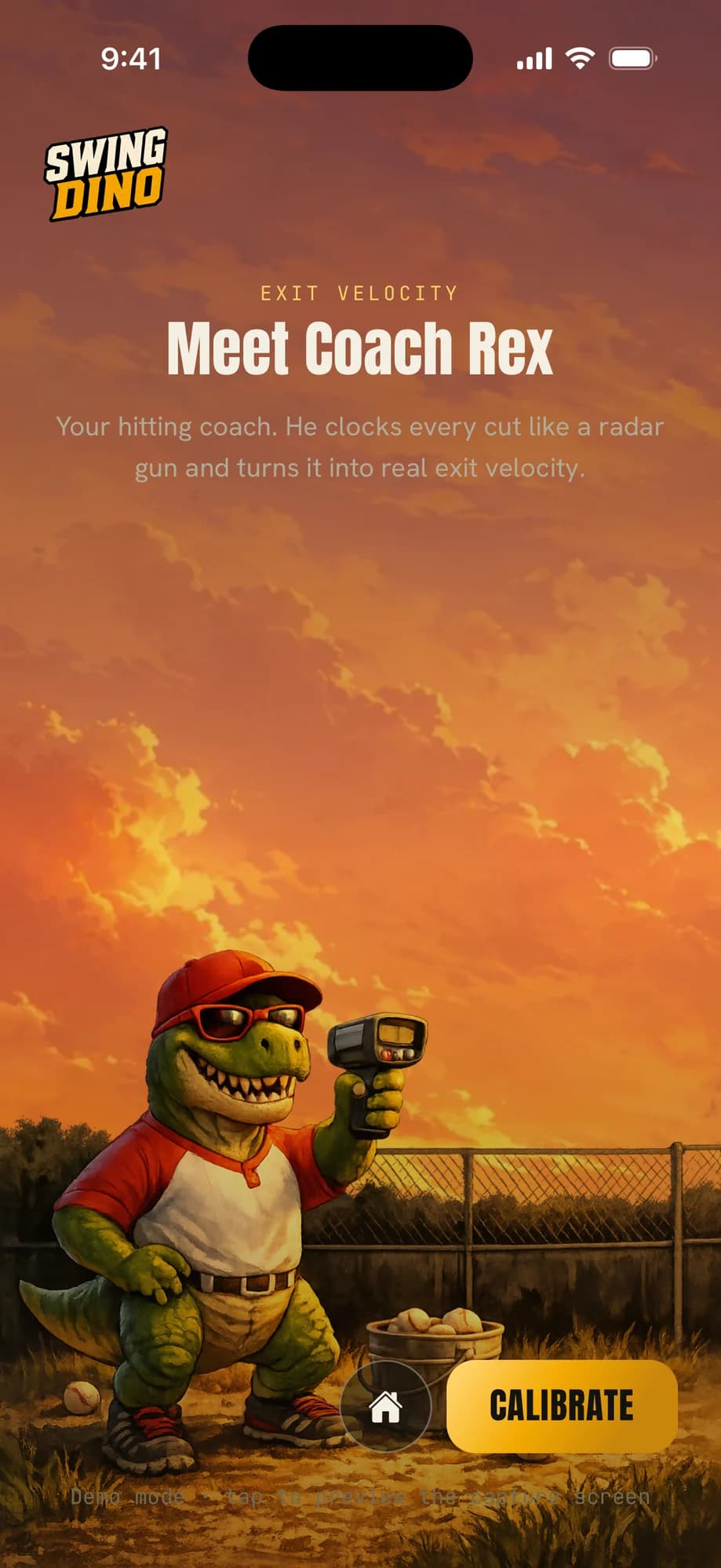
Prop your iPhone to the side of the tee and SwingDino clocks how hard the ball comes off the bat, free. A coach character named Coach Rex reads each swing, logs the number, and charts the climb. No radar gun, no bat sensor, no cage.
How the read works
Set the phone to the side, hit off a tee, and you get the exit velo of that swing. Same setup every time, so today's number compares fairly to next month's.
Not one lonely radar reading. Each clean cut gets a number, so a handful of swings shows the real range, not a lucky peak.
The point is the climb. SwingDino charts exit velo over weeks so you can see a hitter get stronger, with proof instead of a hunch.
No $300 radar, no sensor strapped to a seven-year-old. The camera you already own does the measuring.
It tells you when it could not see
A camera is only as good as the clip. When the ball is too far away, the light is bad, or the angle is wrong, SwingDino says so, instead of inventing a number off a frame it could not read. That is the whole philosophy, and it is why we show fewer numbers on purpose. The full breakdown lives on our accuracy page.
Learn exit velocity
Average exit velocity by age
A by-age benchmark chart for youth baseball, and what counts as a good number.
Fastpitch exit velocity by age
The softball-specific chart, and why the numbers run lower than baseball.
How to measure it at home
The phone setup and the five framing habits that get you an honest number.
Drills that raise it
The tee work, strength, and on-time contact that move the number over weeks.